
Precision-engineered for the modern player.
At StructurePath, we view application architecture not as a static blueprint, but as a living ecosystem. Total immersion in mobile gaming is fragile; it can be shattered by a single dropped frame or a thermal throttle event. Our features are designed to protect that immersion through technical transparency and predictive logic.
We have moved away from "black box" development. Every module in our suite—from the predictive frame rate engine to the narrative branch visualizer—is built on the belief that developers should have the visibility of an architect and the speed of a level designer. This is a deep dive into the technical DNA that powers our most resilient applications.

The topographical Performance Profiler
The Performance Profiler visualizes frame time as a digital landscape. Standard charts often hide micro-stutters in averages. By mapping every frame to a topographical axis, we make bottlenecks intuitive. A sudden "mountain peak" in the visualization translates directly to a resource-heavy draw call or a memory overhead spike.
This visualization allows junior developers to spot optimization opportunities that would otherwise require deep GPU debugging skills. During our stress tests on mid-range German mobile hardware, this tool reduced the time-to-fix for thermal throttling issues by nearly 65%.
"Our technical choices are governed by a simple constraint: if a feature doesn't improve the long-term retention of a mid-range device user in Berlin, it doesn't make the build. We prioritize stability over flair, and predictability over performance peaks."
Real-time Hot-Swapping
Developers can replace textures and model data without project recompilation. This cuts iteration cycles from hours to seconds during critical crunch phases.
Ambient Intelligence
Spatializes sound based on geometry while dynamically altering music intensity to match player performance streaks, enhancing focus cues.
Moment Bookmarking
Snapshot the entire memory state—inventory, health, enemy AI nodes—to test branching narrative paths or boss mechanics instantly.
Cultural Guardrails
Context-aware translation that automatically flags culturally sensitive content for review in German and Japanese markets.
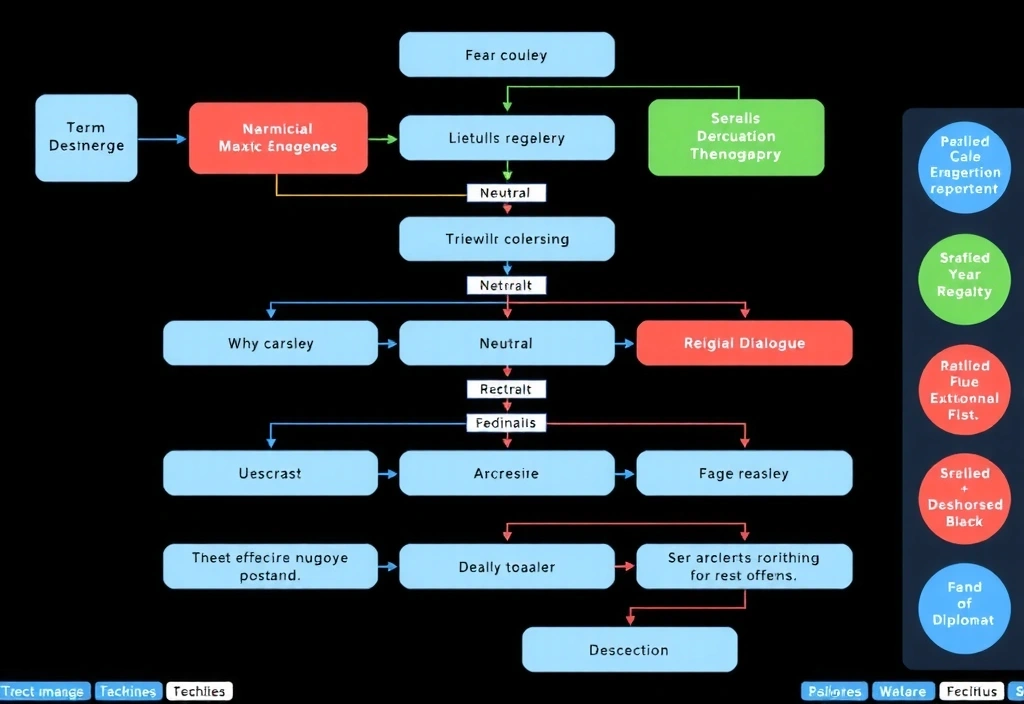
Exhibit D — Branching Logic Map
The Narrative Branch Visualizer
Beyond simple text choice, our Narrative Branch Visualizer maps the emotional pacing of an entire game session. Writers can see the "weight" of decisions as a physical flowchart, highlighting where player agency might be leading to an unintended dead-end or a dramatic lull. This ensures consistency in the storytelling arc across localizations.
This tool is indispensable for QA leads who need to trace why certain player segments are dropping off during complex dialogue sequences in Chapter 3. By correlating movement heatmaps with narrative choices, we uncover the "why" behind play-style shifts.
Standard Vocabulary
Shader Graph Dependency
Opinion: Node-based materials are great, but over-reliance creates "shader soup" that kills mobile GPUs. We enforce a 5-node maximum for base environmental textures.
Predictive Frame-Queue
Opinion: Essential. If you aren't predicting GPU load 3 frames ahead, you aren't optimizing for mobile. Reactive cooling is already too late.
Lossless ML-Compression
Opinion: Marketing hype vs. Reality. Machine learning identified redundancies better than human artists, but only at high-frequency textures like gravel or skin.
Network Desync Spikes
Opinion: The silent killer of retention. We treat anything over 200ms as a critical bug, prioritizing state-rewind over visual smoothness, always.
UX Friction Audit
Opinion: "Seamless" is a buzzword. Sometimes a 2-second loading screen is a necessary emotional beat to reset the player's cognitive load.
Ready for the Next Build?
Our technical framework is available for select partners looking to stabilize their high-growth mobile applications for the EU market.
Stability Benchmark (Android v13+)
Asset Hot-swap Efficiency